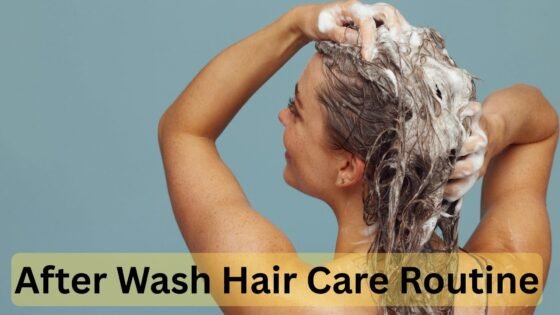
After Wash Hair Care Routine: Smooth, Frizz-Free Hair Every Day

You’ve just stepped out of the shower, and the mirror shows something that used to feel routine and now catches you off guard, wet strands clinging thin against a scalp that’s more visible than it used to be.
The instinct is to grab the thickest towel you own and wrap it tight and fast, like covering up a problem.
But wet hair isn’t the same fiber you style dry. Water breaks the hydrogen bonds holding each strand’s shape, which is why hair feels weaker and stretches further right after a wash, and on finer, more porous strands, that stretch is exactly where breakage starts.
What follows is a five-step system, done in about ten minutes, that works with that fragility instead of against it, and actually builds the root body you’re trying to hold onto.
The 3 Post-Wash Habits Breaking Your Hair
Before the system itself, it helps to know what’s actually been working against you.
- The terry-cloth rub. A standard cotton towel has thick, looped fibers that catch on the hair’s outer cuticle layer, and rubbing it back and forth creates hundreds of tiny snags per pass. On fine or grey strands, where the cuticle is already thinner and more likely to be lifted, that friction shows up as frizz first and breakage soon after.
- Brushing from the scalp down. Starting a brush or comb at the roots and pulling down through a knot forces the tangle to travel the full length of the strand, and every inch it moves adds tension at the root, the weakest anchoring point on thinning hair. That’s traction, and it’s a completely avoidable kind of hair loss.
- The wrong product placement. A rich cream or oil applied at the roots coats the scalp before the hair has any chance to dry with lift, sealing flatness in before a blow dryer even gets involved. On lower-density hair, that root weight is the single fastest way to look thinner by evening than you actually are.
The 5-Step After-Wash System for Volume & Fiber Protection
Step 1: The Microfiber Press
Swap the cotton towel for a microfiber one, they absorb water through capillary action rather than friction. Press the fabric against sections of hair and hold for a few seconds rather than rubbing, and skip the tight turban wrap entirely, the twisted pressure at the crown is its own source of root strain.
Pro tip: Microfiber pulls water out three to four times faster than cotton, so you’ll actually spend less time on this step, not more.
Step 2: Scalp Prep
While hair is still damp and the follicle is clean and open, apply a lightweight, watery density serum directly to the scalp, not the lengths. Heavier creams sit on top of the hair shaft, but a low molecular weight formula can actually reach the follicle, which is where root lift and long-term density support both start. This step matters even more if your stylist has also built volume and thickness into your current cut, the product and the cut are working toward the same goal.
Pro tip: Look for the word serum or tonic on the label rather than cream, the lighter the listed viscosity, the better it penetrates thinning density.
Step 3: Gentle Sectioned Detangling
Divide hair into two or three sections and start detangling at the very ends with a wide-tooth comb, working upward in small increments. Each knot gets worked loose from below rather than pulled from above, so tension never reaches the root before the tangle is already gone.
Pro tip: Hold the section just above where you’re combing with your free hand, that grip absorbs the pull instead of your scalp.
Step 4: The Weightless Moisture Barrier
Apply a lightweight leave-in conditioner starting at the ears and working down, keeping the crown and root area completely product-free. This protects the more porous, drier ends without adding the weight that flattens volume at the exact spot you need it most.
Pro tip: A pea-sized amount is genuinely enough for most fine hair lengths, more product doesn’t add protection, it just adds weight.
Step 5: The 80% Pre-Dry Rule and Cool Shot
Let hair air-dry or rough-dry with a diffuser to about 80% dry before introducing any brush tension or heat styling, wet hair is at its most elastic and most vulnerable to stretching damage. Finish your blowout with a few seconds of the dryer’s cool shot button, cool air closes the cuticle and locks in shine that hot air alone leaves behind.
Pro tip: If you’re short on time, prioritize getting to 80% dry with zero brush contact over rushing the whole blowout while hair is still soaking wet.
Standard Habits vs. The Fine Hair Lift Routine
| Post-Wash Step | Standard After-Shower Habit | The Fine Hair Lift Routine |
|---|---|---|
| Drying | Heavy cotton towel, rubbed vigorously | Microfiber towel, pressed and held |
| Detangling | Brushed from roots down through knots | Wide-tooth comb, worked from ends upward |
| Product placement | Rich cream or oil applied at the roots | Light serum at the scalp, leave-in from ears down only |
| Drying method | Hot air blasted until bone-dry | Air or rough-dry to 80%, then a cool shot to finish |
| Right after the shower | Tight, twisted towel turban on top of the head | Loose press only, no twisting pressure at the crown |
What Mature Hair Actually Needs When Wet
Grey and lightening strands aren’t just a color change, the hair shaft itself often has a different structure, frequently coarser in diameter but with a compromised cuticle that leaves it more porous than pigmented hair. That porosity means it absorbs water fast when wet and loses it just as fast once dry, which is why the ends specifically can feel dry within hours of a wash even though the hair was just soaked.
Air-drying is gentler overall since it skips heat exposure entirely, but it also dries slowly, giving gravity more time to pull fine strands flat before they set. A light, deliberate blowout using the 80% rule from Step 5 tends to give mature fine hair the best of both worlds, most of the drying happens gently, and the last stretch of heat is what actually builds and holds the lift. Root health from a routine like this is also what lets many of the hairstyles over 50 we cover actually hold their shape through the day instead of falling flat by afternoon.
Frequently Asked Questions
Is it better to let fine, thinning hair air dry or blow dry?
Neither wins outright, the combination does. Air-drying is the gentler option and worth using whenever your schedule allows, but hair left to dry completely on its own tends to dry flat since gravity pulls on it the entire time. Using a diffuser or blow dryer just for the final 20% of drying time, aimed at the roots with a round brush, adds the lift that air-drying alone usually can’t.
Should I put hair oil on wet fine hair after washing?
Oil molecules are generally too large to penetrate a wet, swollen hair shaft, so oil applied to soaking wet fine hair mostly sits on the surface and weighs down roots before you’ve even started drying. Save oil, if you use it at all, for the very ends once hair is fully dry, and reach for a lightweight, water-based serum instead during the wet phase.
How can I stop my fine hair from tangling into knots right after washing?
Most post-wash tangling comes from wet strands rubbing against each other in the shower or under a towel, so the fix starts before you even reach for a comb. Work conditioner or a detangling leave-in through the ends while hair is still in the shower, then use the sectioned, ends-first method from Step 3 the moment you step out, waiting even a few minutes lets strands dry slightly and knot further.
What’s the best way to sleep if my hair is still slightly damp after an evening wash?
Loosely braid or twist hair into one or two low, soft sections rather than leaving it fully loose or pulling it into a tight elastic, both extremes cause friction or tension damage on hair that’s still in its most vulnerable, swollen state. A silk or satin pillowcase reduces surface friction regardless of which option you choose, and it’s worth the switch if you regularly go to bed with damp hair.
Save This 5-Step Protocol
Screenshot this guide or pin it to your hair care board now, the ten minutes right after your next shower go a lot better with the steps already in front of you instead of half-remembered.
Body and fullness don’t start with a product you buy, they start with how you treat your hair in the ten minutes right after you step out of the shower. Get that window right, consistently, and the haircuts for fine hair you already have finally get the chance to actually hold their shape the way they were cut to.