
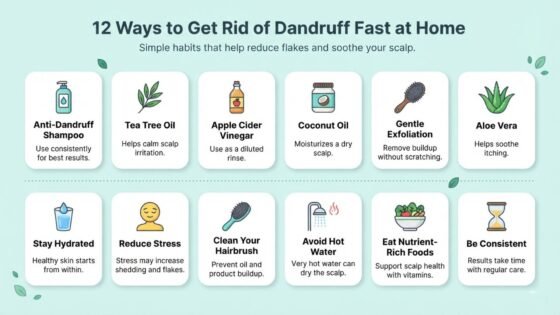
12 Ways to Get Rid of Dandruff Fast at Home

Dandruff is stubborn because it usually has more than one cause working at once, dry skin, a naturally oily scalp, product buildup, or a mild fungal overgrowth called Malassezia that almost everyone carries in small amounts. That mix is exactly why one single remedy rarely clears it up on its own.
Below are twelve practical ways to get rid of dandruff at home, starting with the basics that work fastest and moving into habits that keep it from coming back.
What Actually Causes Dandruff
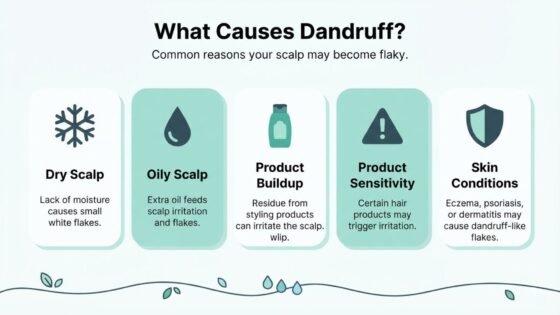
Different causes show up a little differently, which makes it easier to spot what you are actually dealing with.
| Cause | What It Typically Looks Like |
|---|---|
| Dry, flaky skin | Small, dry white flakes, often worse in winter. |
| Oily scalp with yeast overgrowth | Larger, greasy, yellowish flakes. |
| Product buildup | Flakes mixed with residue, itchy scalp. |
| Sensitivity to a hair product | Redness and flaking tied to one specific product. |
| Related skin conditions | Thick, stubborn flakes that resist regular shampoo. |
1. Use an Anti-Dandruff Shampoo with a Proven Active Ingredient
Look for one of three ingredients on the label: zinc pyrithione, ketoconazole, or salicylic acid, all of which have real evidence behind them for reducing flaking and scalp yeast.
Leave the shampoo on the scalp for the full time listed on the bottle, usually three to five minutes, rather than rinsing it out immediately. This is the fastest starting point for most people.
2. Try a Diluted Tea Tree Oil Rinse
Mix a few drops of tea tree oil into a carrier oil or your regular shampoo rather than applying it directly, since it is strong enough to irritate skin at full strength.
Tea tree oil is often used for its natural antifungal properties, and a diluted rinse left on for a few minutes before washing out may help support a flaky scalp.
💡 Quick Tip
A patch test on your inner arm first helps rule out sensitivity before applying tea tree oil to your scalp.
3. Apple Cider Vinegar Rinse
People sometimes worry vinegar will smell or damage hair, but a properly diluted rinse, one part vinegar to two or three parts water, actually helps restore the scalp’s natural pH after shampooing.
Pour it over the scalp after your regular wash, let it sit for a couple of minutes, then rinse thoroughly. The smell fades completely once hair dries.
Too harsh, can irritate the scalp and skin.
Gentle enough for regular use, helps rebalance pH.
4. Coconut Oil and Lemon Juice Treatment
Warm two tablespoons of coconut oil slightly, mix in a teaspoon of fresh lemon juice, and massage into the scalp about thirty minutes before showering.
Coconut oil helps moisturize a dry, flaking scalp while lemon’s natural acidity may help with buildup. Rinse thoroughly, since leftover oil can weigh hair down or attract more flakes to stick.
Getting the ratio right
5. Baking Soda Scalp Scrub
The mistake here is using this one too often. Baking soda is a strong exfoliant, and using it more than once a week can dry out the scalp and make flaking worse rather than better.
Mix a tablespoon with a small amount of water into a paste, massage gently for a minute, then rinse well. Once weekly is plenty for most scalps.
6. Aloe Vera Scalp Gel
Pure aloe vera gel cools an itchy, irritated scalp almost immediately, which makes it one of the more soothing options on this list rather than the fastest at clearing flakes outright.
Apply directly to the scalp, leave for fifteen to twenty minutes, then rinse. It pairs well alongside an anti-dandruff shampoo rather than replacing it entirely.
1
Apply pure aloe vera gel directly to the scalp.
2
Leave on for fifteen to twenty minutes.
3
Rinse well, then follow with your regular shampoo.
7. Get Your Wash Frequency Right
Washing too rarely lets oil and dead skin build up, while washing too often can strip the scalp and trigger more flaking as it tries to compensate.
Most people do best washing every two to three days when dealing with active dandruff, adjusting based on how oily or dry your scalp tends to run.
Wash every two to three days during a flare-up.
Adjust based on your own scalp’s oil level.
Washing daily out of habit regardless of need.
Going a week or more without washing.
8. Manage Stress Levels
Dandruff often flares during stressful periods, even when nothing else about your routine has changed, since stress can affect oil production and immune response in the scalp.
Sleep, regular movement, and any stress management practice that genuinely works for you can help keep flare-ups less frequent over time.
| Habit | Why It Helps |
|---|---|
| Consistent sleep | Supports the body’s normal stress response. |
| Regular movement | Helps regulate stress hormones over time. |
9. Brush Your Hair Regularly
A few minutes of brushing each day helps redistribute natural oils down the hair shaft instead of letting them concentrate at the scalp, where they can feed flaking and buildup.
It also physically loosens flakes before they become visible, which is part of why regular brushing shows up so often in dandruff advice.
A few minutes of daily brushing redistributes oil and loosens flakes before they build up.
10. Avoid Hot Water When Washing
Hot water feels good but strips more natural oil than lukewarm water does, which can leave the scalp drier and more prone to flaking by the next day.
Rinse with lukewarm or slightly cool water instead, especially on the scalp itself, and save the hottest water for rinsing product out of the lengths.
- ▸Use lukewarm water on the scalp specifically.
- ▸Save hotter water for rinsing lengths only.
- ▸Hot water strips more natural oil than needed.
11. Pay Attention to Your Diet
Omega-3 fatty acids from fish, walnuts, or flaxseed, along with zinc-rich foods like pumpkin seeds and lentils, support overall skin health, including the scalp.
No single food clears up dandruff on its own, but a consistently balanced diet gives every other remedy on this list a better foundation to work from.
12. Give New Products Time Before Switching
Stick with any new anti-dandruff shampoo or rinse for at least two to four weeks before deciding it is not working, since scalp conditions take time to respond and switching too fast just resets the process.
Track flaking and itchiness week by week rather than day by day to get an honest read on whether something is actually helping.
📌 Good To Know
Two to four weeks is the realistic window for judging whether a new dandruff routine is actually working.
When It Might Be More Than Dandruff
Persistent, thick, or stubborn flaking that does not respond to regular anti-dandruff shampoo after several weeks may point to a related skin condition rather than ordinary dandruff.
Final Thoughts
Dandruff responds well to consistency more than intensity. A gentle, proven shampoo used correctly, paired with the right habits around washing, brushing, and stress, tends to outperform any single dramatic remedy.
Give whatever you try several weeks before judging results, and treat a stubborn case that will not budge as a signal to check in with a dermatologist rather than a reason to keep guessing. Save this list for the next time your scalp needs a reset.