21 Ultra-Flattering Warm Caramel Balayage With Honey Highlights for a Rich and Radiant Finish

Every brunette hits the same wall eventually. Dark hair starts to feel like it’s disappearing into itself, but full blonde means root touch-ups every four weeks and a toner appointment you can’t skip. Caramel and honey together solve that problem in one move, warmth without the commitment, brightness without the bleach-heavy upkeep.
It’s the single most requested reference photo in my chair, and has been for a few years running now. Clients pull up the same soft, sun-warmed color on Pinterest, and what they’re actually asking for is dimension, not a full color change.
Here’s the part that photo doesn’t show you. Get the undertone wrong for your skin, and that exact same caramel reads orange instead of rich. The base level matters just as much as the shade name, a color that looks luxurious on a level 4 brunette can look muddy on a level 6.
What follows are 21 real versions of this combination, the ones that actually hold up outside of studio lighting.
Quick Match Guide
Figuring out your own undertone first, the same way our undertone matching guide breaks it down, makes every shade below a lot easier to choose between.
| Skin Undertone | Best Highlight Shade | Recommended Base Level | Maintenance Level |
|---|---|---|---|
| Warm | Toffee Honey | Dark Brown, Level 3 to 4 | Medium |
| Warm | Golden Caramel | Light Brunette, Level 5 to 6 | Medium |
| Neutral | Raw Honey | Medium Brown, Level 4 to 5 | Low |
| Neutral | Butterscotch | Light Brunette, Level 5 to 6 | Medium |
| Cool | Spiced Caramel | Dark Brown, Level 3 to 4 | Gloss-only |
| Cool | Cool Honey Blonde | Medium Brown, Level 4 to 5 | Medium |
Category A: Rich & Deep Contrast
Espresso and dark chocolate bases that hold real depth
1. Espresso Base with Toffee Ribbon Balayage
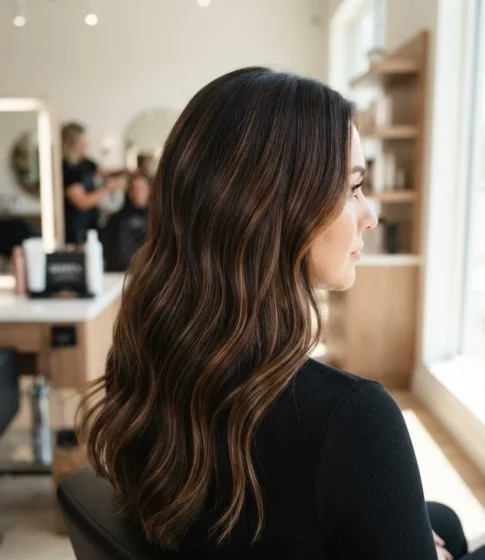
An espresso base, level 3, gets thin, hand-painted ribbons of toffee woven mostly through the mid-lengths and ends, never the root. The ribbons stay narrow, about a pencil’s width, which is what keeps this reading as dimension instead of stripes. It photographs rich in low light and warm in direct sun, genuinely one of the most versatile combinations on this list.
Ask for ribbons no wider than a quarter inch, placed with a balayage brush rather than foils, foils create harder lines than this soft look needs.
- Best suited for: Warm to neutral undertones, any face shape, medium to thick hair
2. Dark Chocolate Melt into Honey Ends
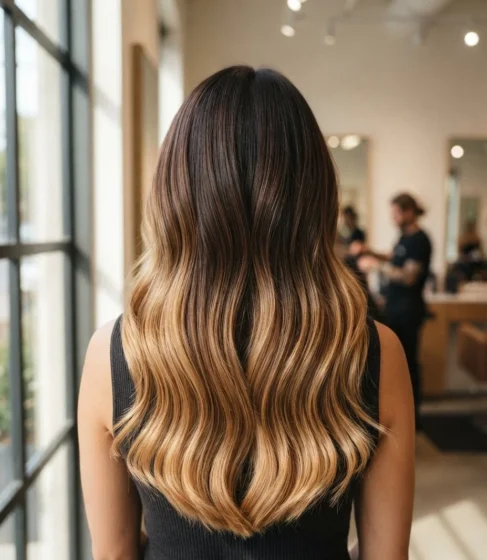
The color starts as a true dark chocolate brown at the root and melts gradually into a warm honey by the ends, no visible line anywhere in between. This is a color-melt technique specifically, which takes longer in the chair than standard balayage but grows out without a single harsh regrowth line. It’s the pick for anyone who wants real change but can’t commit to monthly touch-ups.
The melt needs to happen over at least three tonal steps, jumping straight from dark chocolate to honey in one blend leaves a visible band.
- Best suited for: Warm undertones, long to medium length hair, any face shape
3. Deep Brunette with a Caramel Root Smudge
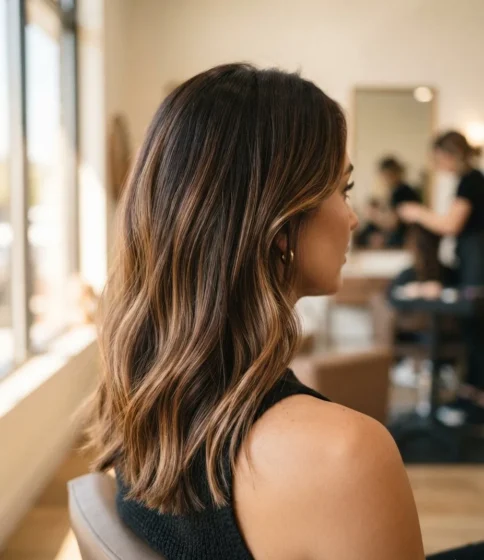
A soft, smudged root shadow in warm caramel, rather than a hard dark root, gives this deep brunette base a lived-in glow instead of the flat, single-process look dark hair can fall into. The smudge is deliberately soft-edged, blended with a brush right at the root before the rest of the color goes in. It reads as effortlessly grown-out even on day one.
Ask specifically for a root smudge, not a root shadow, the softer term matters, shadow implies a harder, more defined line.
- Best suited for: Neutral to warm undertones, oval and heart face shapes
4. Midnight Espresso with Hidden Honey Underlights
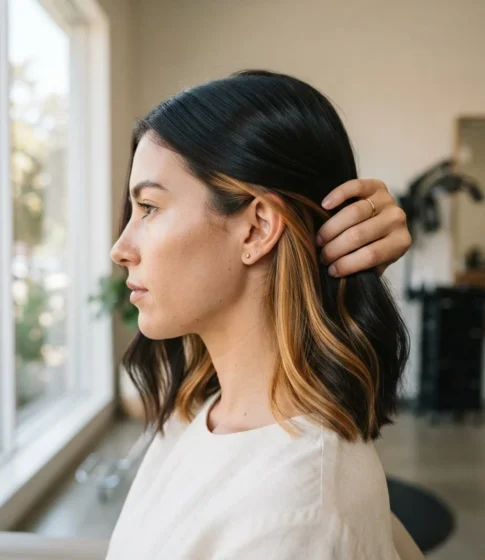
The top layer stays a rich, near-black espresso while honey underlights sit just beneath the surface, invisible until hair moves or gets tucked behind an ear. It’s genuinely the most workplace-appropriate option on this list, dramatic in private, understated in a meeting.
Have the underlights placed specifically at ear level, any higher and they show constantly, any lower and they barely show at all.
- Best suited for: Cool to neutral undertones, any hair length with some layering
5. Chocolate Brown with Warm Caramel Baby Lights
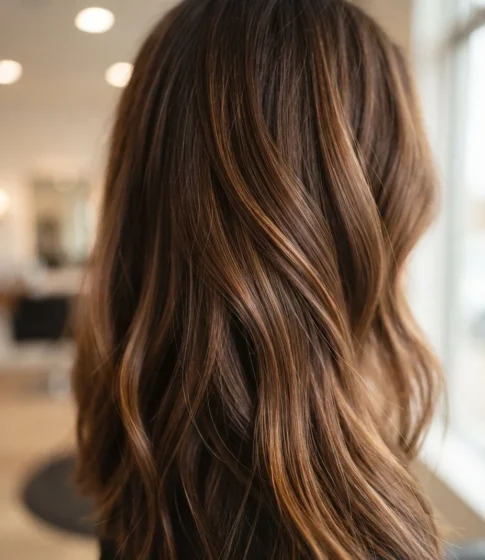
Baby lights use much finer sections than standard highlights, which is what gives this chocolate brown base its soft, almost sun-faded quality rather than a defined highlight pattern. The fine placement takes longer at the chair but blends so seamlessly it barely needs a toner touch-up between full appointments.
Confirm you’re getting baby lights specifically, not regular highlights done finer, the technique and the foil size are genuinely different.
- Best suited for: Warm undertones, fine to medium density hair
Category B: High-Impact Face Framing
Money pieces, halo framing, and curtain bangs that do the work up front
6. Caramel Money Piece on Dark Roots
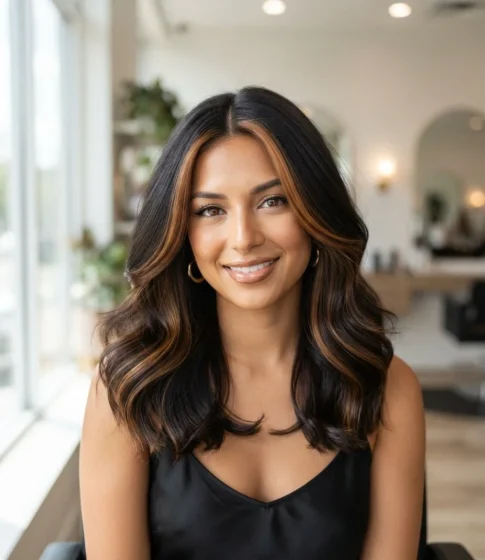
Two bold, lightened panels framing the face on either side of the part, left dramatically brighter than the rest of a dark base, do more to lift your whole complexion than highlights spread evenly across the head. It’s a fast-growing trend precisely because it’s low effort with high visual payoff.
Ask for the panels to start about an inch back from your part, not right at it, starting too close to the part looks patchy rather than intentional.
- Best suited for: Any undertone, works especially well on darker natural bases
7. Honey Halo Framing Around the Crown
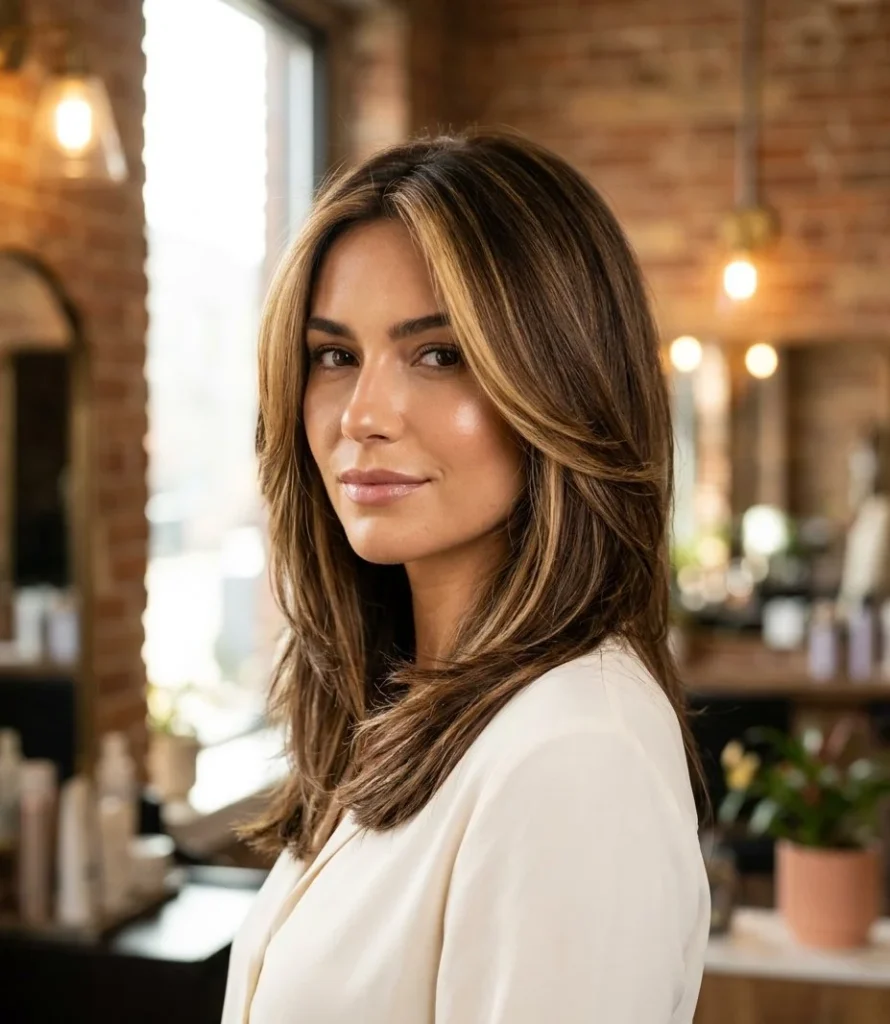
Lightened pieces circle the crown and hairline specifically, like a soft halo, rather than concentrating only at the front like a money piece does. This spreads the brightness more evenly around your whole face, which flatters round and square face shapes especially well by softening the edges.
The halo needs pieces placed at the temples and just behind the ears too, not only the front hairline, or the effect only shows from directly ahead.
- Best suited for: Round and square face shapes, any undertone
8. Curtain Bangs with Warm Caramel Balayage
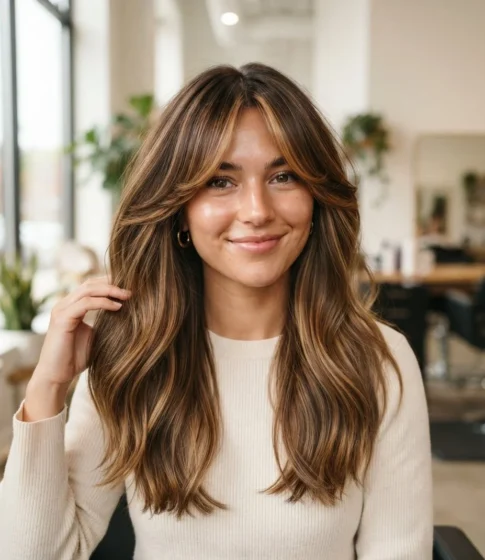
Parted curtain bangs skim the cheekbones while caramel balayage runs through both the bangs and the rest of the length, creating one continuous, sun-warmed effect rather than treating the fringe as separate from the color. Our curtain bangs styling guide covers the cut side of this exact pairing.
Color the bangs slightly lighter than the rest of the balayage, since they sit closest to your face, extra brightness there reads as more flattering.
- Best suited for: Oval and round face shapes, any hair length
9. Face-Framing Honey Streaks with a Deep Side Part
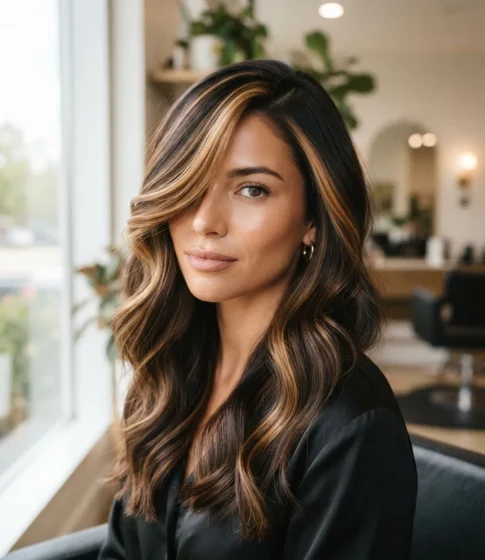
A few concentrated honey streaks placed along a deep side part create an asymmetrical brightness that draws the eye up and across the face rather than straight down. It’s a subtler cousin of the money piece, less bold but still noticeably lifting.
Have the streaks placed only on the heavier side of the part, streaks on both sides compete with each other and lose the asymmetrical effect.
- Best suited for: Any face shape, works particularly well with a deep side part already in your routine
10. Butterscotch Money Piece on Medium Brown
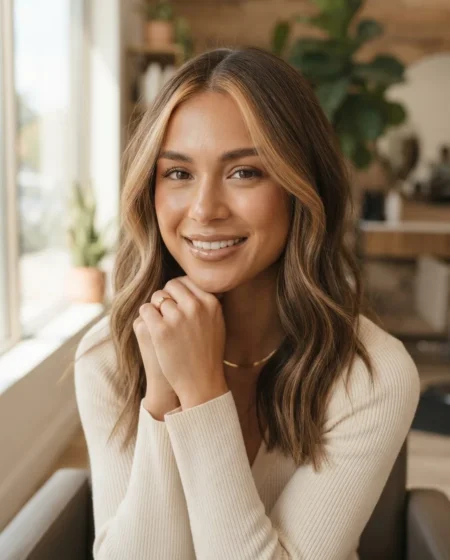
A softer, more golden take on the classic money piece, butterscotch tones read warmer and less contrast-heavy against a medium brown base than a straight caramel would. It’s a gentler entry point if you want the money piece look without quite as much drama.
Ask your colorist to keep the panel width narrower than a typical money piece, butterscotch’s softness needs less surface area to still read clearly.
- Best suited for: Warm undertones, medium brown natural bases
Category C: Texture & Cut-Specific
Bobs, long layers, shag cuts, and natural curls, matched to the color that actually works with them
11. Caramel Balayage on a Textured Lob
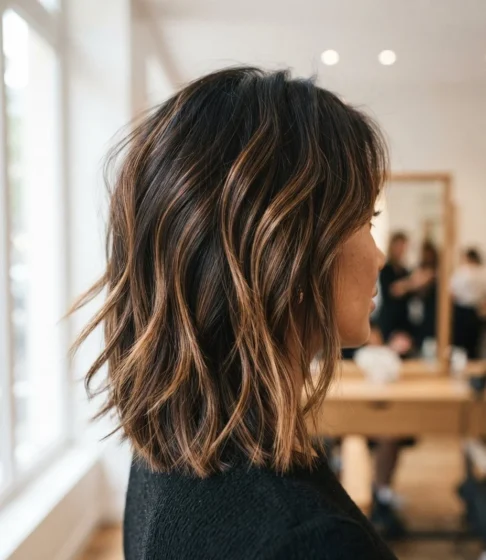
The balayage placement follows the natural movement of a textured lob’s layers, concentrated at the ends where the layers already flip and separate. On this length specifically, the color does double duty, adding both warmth and the appearance of extra texture.
Have the balayage painted heaviest where the layers naturally flip outward, that’s where movement catches light most.
- Best suited for: Any face shape, chin to collarbone length
12. Honey Highlights Through Long Layers
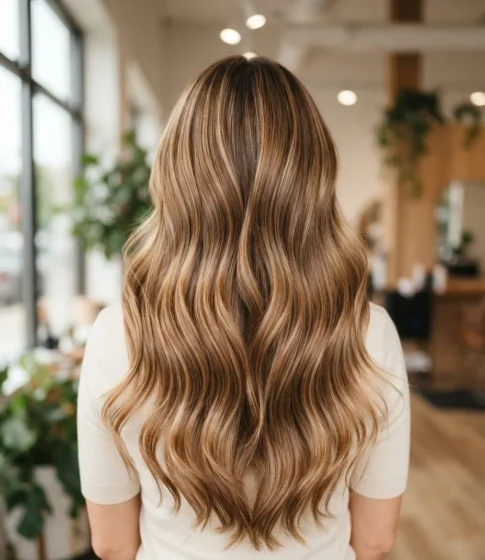
Long layers give honey highlights room to actually move, catching light differently at every length rather than sitting flat the way the same color would on a blunt, one-length cut. It’s one of the more classic pairings on this list precisely because it never really goes out of style.
Request highlights placed with more concentration at the ends than the mid-lengths, that gradient is what makes long hair look sun-kissed rather than uniformly streaked.
- Best suited for: Any undertone, long hair with real layering already cut in
13. Toasted Caramel on a Modern Shag
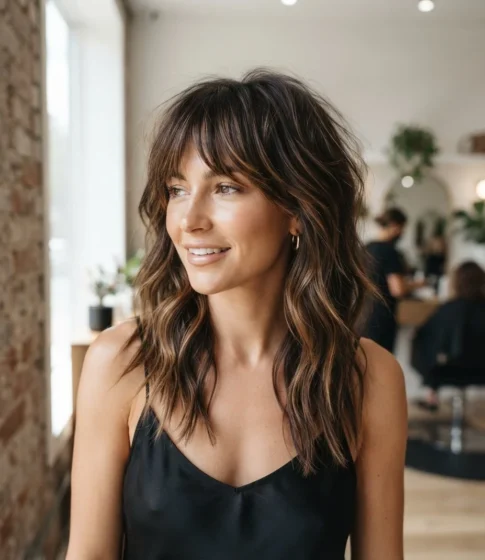
Shag layers add volume and texture on their own, and toasted caramel, a slightly deeper, less golden caramel tone, adds warmth without competing with all that built-in movement. The color stays secondary to the cut here, which is exactly the point on a shag.
Keep the color low-contrast against the base, a shag with high-contrast highlights can look busy instead of textured.
- Best suited for: Any face shape, medium to thick density for the shag layers to show properly
14. Warm Honey Melt on Natural Curls
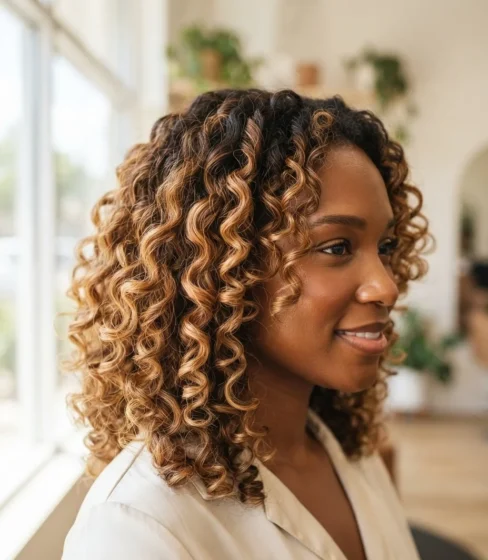
Honey tones melted through natural curls catch and hold light differently with every curl’s individual shape, creating a genuinely three-dimensional color effect that straight hair can’t replicate the same way. The color needs to be applied with the curl pattern in mind, painted along the curl’s natural bend rather than in straight vertical sections.
Ask for the color applied while curls are stretched, not in their natural shrunken state, that ensures even coverage once curls spring back.
- Best suited for: Curly to coily textures, any undertone
15. Caramel Ribbons on a Wolf Cut
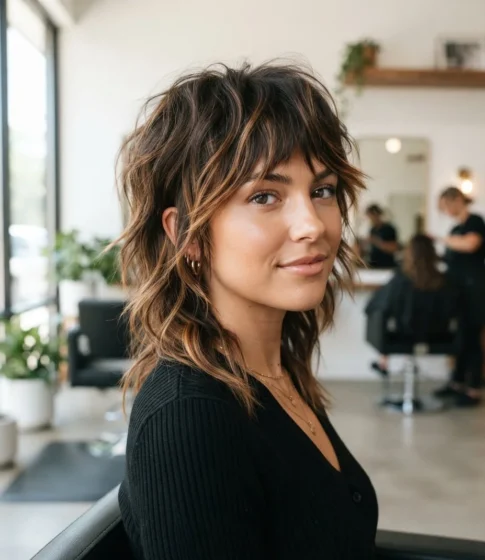
The wolf cut’s heavy layering and shorter crown pieces get individual caramel ribbons woven through, following each layer’s own length rather than one uniform placement. It’s a high-energy pairing, the cut already has a lot going on, and the color adds warmth without adding visual noise.
Have the shortest crown layers colored slightly lighter than the rest, that’s what makes the wolf cut’s signature volume actually visible from the front.
- Best suited for: Round and oval face shapes, medium to thick hair for the wolf cut’s volume
Category D: Multi-Tonal & Seasonal Twists
Toasted spices, butterscotch melts, and vanilla gloss for something a little different
16. Toasted Cinnamon and Caramel Blend
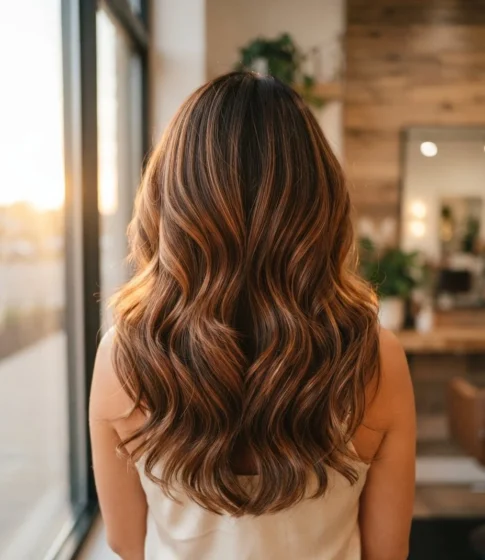
Cinnamon and caramel tones woven together rather than kept as separate streaks create a warm, multi-dimensional blend that shifts between reddish and golden depending on the light. It’s a genuinely seasonal-feeling color that still works year-round on the right base.
Ask your colorist to custom-blend the two tones in the same bowl rather than applying them as separate streaks, that’s what creates the shifting effect.
- Best suited for: Warm undertones, medium to dark brown bases
17. Butterscotch Melt Ombre
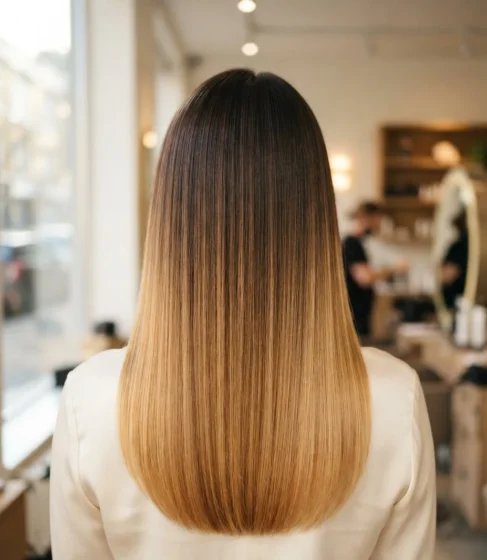
A gradual ombre from a natural root into a soft butterscotch at the ends skips balayage’s hand-painted texture in favor of one smooth, continuous gradient. It’s a cleaner, more graphic effect than balayage, better suited to someone who wants a defined look rather than a soft, undone one.
Have the transition start below the chin rather than higher up, that placement keeps regrowth from looking like an obvious line too soon.
- Best suited for: Any undertone, long hair with at least a few inches to dedicate to the transition
18. Vanilla Gloss Over Caramel Balayage
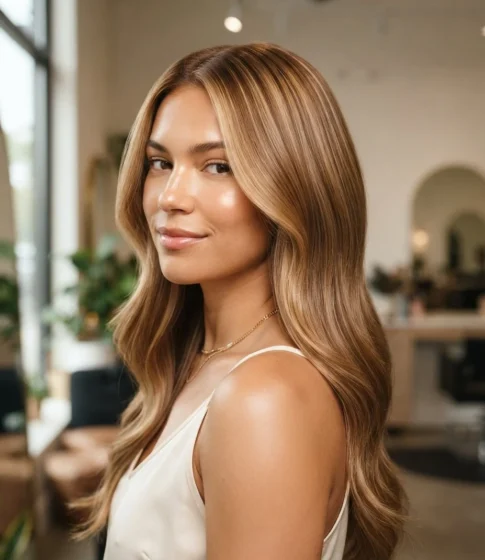
A clear or pale vanilla gloss applied over an existing caramel balayage softens and brightens the whole color without adding a new tone, essentially turning up the shine and lightness by a notch. It’s a genuinely low-commitment way to refresh a color that’s started to look a little flat between full appointments.
This is a gloss-only appointment, ask for it by name specifically so you’re not accidentally booked for a full color service.
- Best suited for: Anyone with existing caramel balayage looking to refresh rather than re-color
19. Spiced Chai Caramel for Fall
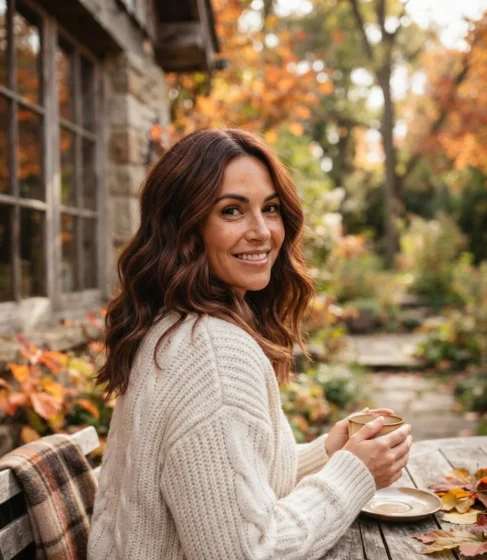
Deeper, slightly muted caramel with a warm, spiced undertone, closer to chai than straight caramel, reads richer against fall wardrobes than the brighter caramel tones that suit summer better. It’s one of the more seasonal-specific picks on this list.
Ask for a touch of red-brown mixed into the caramel formula, that’s what gives it the spiced, chai-like depth instead of reading as plain caramel.
- Best suited for: Warm to neutral undertones, dark to medium brown bases
20. Golden Amber and Honey Multi-Tonal Weave
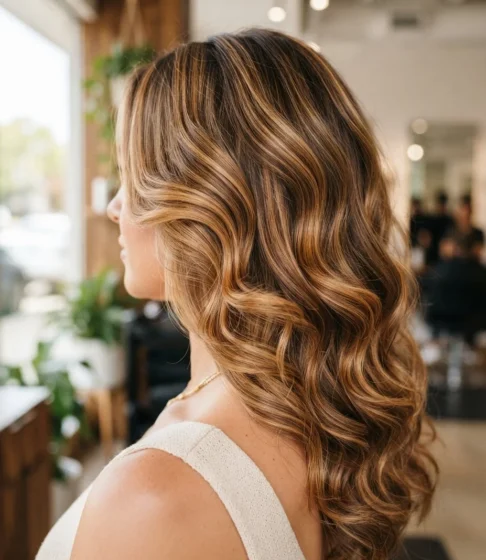
Three or more tones, amber, honey, and a base caramel, woven together in the same balayage session create genuine multi-dimensional depth rather than the flatter look a single highlight tone gives, similar to the layered approach in our brown highlights placement guide. It takes real color mixing skill to execute well.
Ask to see the three formulas mixed and swatched before application, a skilled colorist will happily show you the tones before they touch your hair.
- Best suited for: Any undertone, thick hair that can support multiple tones without looking muddy
21. Caramel Drizzle with Cool-Toned Ash Roots
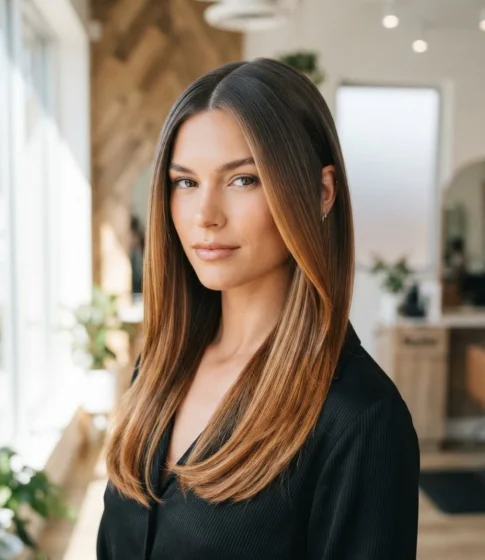
Warm caramel through the lengths against cool, ash-toned roots creates a deliberate warm-cool contrast that reads as more editorial than a fully warm or fully cool color would alone. It’s not for the undertone-matching purists, and that’s kind of the appeal.
Keep the ash root section relatively short, two inches at most, a longer cool root fights the warm lengths instead of contrasting with them.
- Best suited for: Cool to neutral undertones, medium to long hair
All 21 at a Glance
| Color Idea | Base Level | Best Undertone | Maintenance |
|---|---|---|---|
| Espresso Base with Toffee Ribbon Balayage | Level 3 | Warm to neutral | Medium |
| Dark Chocolate Melt into Honey Ends | Level 3 to 4 | Warm | Low |
| Deep Brunette with Caramel Root Smudge | Level 4 | Neutral to warm | Low |
| Midnight Espresso with Hidden Honey Underlights | Level 2 to 3 | Cool to neutral | Low |
| Chocolate Brown with Warm Caramel Baby Lights | Level 4 | Warm | Medium |
| Caramel Money Piece on Dark Roots | Level 3 to 4 | Any | Medium |
| Honey Halo Framing Around the Crown | Level 4 to 5 | Any | Medium |
| Curtain Bangs with Warm Caramel Balayage | Level 5 | Warm | Medium |
| Face-Framing Honey Streaks, Deep Side Part | Level 5 | Any | Medium |
| Butterscotch Money Piece on Medium Brown | Level 5 to 6 | Warm | Medium |
| Caramel Balayage on a Textured Lob | Level 4 to 5 | Any | Medium |
| Honey Highlights Through Long Layers | Level 5 | Any | Medium |
| Toasted Caramel on a Modern Shag | Level 4 | Warm | Low |
| Warm Honey Melt on Natural Curls | Level 4 to 5 | Any | Medium |
| Caramel Ribbons on a Wolf Cut | Level 4 to 5 | Any | Medium |
| Toasted Cinnamon and Caramel Blend | Level 4 | Warm | Medium |
| Butterscotch Melt Ombre | Level 5 to 6 | Any | Low |
| Vanilla Gloss Over Caramel Balayage | Existing balayage | Any | Gloss-only |
| Spiced Chai Caramel for Fall | Level 3 to 4 | Warm to neutral | Medium |
| Golden Amber and Honey Multi-Tonal Weave | Level 4 to 5 | Any | Medium |
| Caramel Drizzle with Cool-Toned Ash Roots | Level 4 to 5 | Cool to neutral | Medium |
The Colorist Cheat Sheet
Say this, close to word for word, and you’ll walk out with dimension instead of stripes.
“I want a hand-painted balayage, not foils, with the color concentrated through the mid-lengths and ends. Keep the root soft with a root melt technique, I don’t want a hard line. For the highlight shade, I’m looking for something in the toffee-to-honey family, warm but not orange, and I’d like a level 8 honey gloss over the top to tie everything together and cut any brassiness. Please use a bond builder like Olaplex throughout the process, especially if we’re lifting more than two levels. And before I leave, can we do a strand test on the underside so I can see how the tone settles once it’s dry.”
Real-World Maintenance & Anti-Brass Routine
A gloss or toner refresh every 4 to 6 weeks keeps caramel and honey tones from drifting toward brassy, even if you’re not due for a full color appointment. Glosses are quick, usually under 30 minutes, and they’re what actually maintains the tone between the bigger balayage sessions.
Purple shampoo neutralizes yellow and brassy tones, which is exactly why it’s the wrong choice for caramel and honey hair, it can pull warm tones toward a dull, ashy gray instead of keeping them rich. Blue shampoo neutralizes orange specifically, which is the actual brass risk on warm caramel color. Use it once or twice a week, not daily, overuse can flatten the warmth you’re trying to keep in the first place.
Lightened sections are more porous than your natural hair, which means they lose moisture faster and show heat damage sooner. A heat protectant before every hot tool, without exception, and a weekly deep conditioning mask keeps honey and caramel strands from looking dry or developing split ends right at the lightened parts specifically.
Save the one that actually matches your undertone before you book, not just the one with the most likes. A good colorist can execute nearly any formula on this list, but they can’t fix a shade that was never going to work against your skin in the first place.