
Low Porosity Hair Care: The Ultimate Guide to Soft, Hydrated, and Healthy Hair

You spray your hair, and instead of soaking in, the water just sits there in little beads until it slides off onto your shoulders.
You deep condition for twenty minutes, rinse it out, and by the next morning your hair feels just as thirsty as before. You’ve bought three different “miracle” leave-ins this year and none of them actually changed anything.
None of that is you doing something wrong, it’s low porosity hair doing exactly what low porosity hair does.
The good news is that low porosity hair isn’t hard to care for once you understand what’s actually happening at the strand level. It just needs a different approach than the routine everyone else seems to swear by.
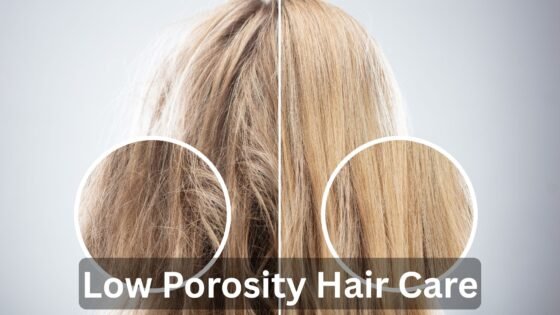
This guide walks through the signs, the science in plain language, and a full routine you can actually stick with, so your hair stops fighting you and starts holding onto moisture the way it’s supposed to.
💧 Quick Guide
LCO Method
Full Weekly Routine
What Is Low Porosity Hair and Why It Matters
Low porosity hair has tightly closed cuticles, the tiny overlapping scales along each strand, which makes it genuinely harder for moisture to get inside the hair shaft. The upside is that once moisture does get in, it tends to stay put longer than it would on other hair types. Think of it like water-resistant hair, it takes a bit more effort to let hydration through, but it holds onto what it gets.
This is also why low porosity hair often looks shiny on the outside while feeling dry or stiff underneath. Knowing this changes how you shop and how you style, since piling on more product is rarely the fix, and can actually make things worse.
Signs You Have Low Porosity Hair
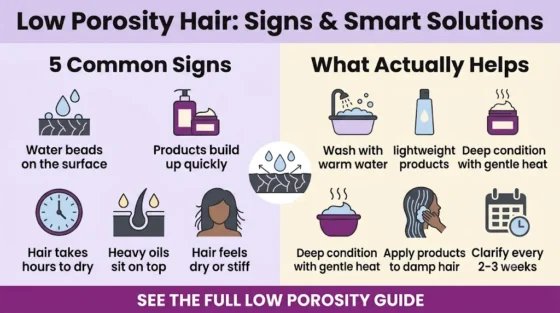
A few tells make low porosity hair pretty easy to spot once you know what to look for:
- Water beads on top of your hair instead of soaking in right away
- Products build up fast, leaving hair feeling coated but still dry underneath
- Hair takes an unusually long time to dry after washing, sometimes hours
- Oils and heavier creams tend to sit on the surface rather than absorbing
- Hair can look shiny and healthy, but feels rough or stiff to the touch
If several of these sound familiar, you’re almost certainly dealing with low porosity strands, and the routine below is built around exactly that.
Why Moisture Struggles to Enter Low Porosity Hair
The tightly packed cuticle layer is the whole story here. Because those scales sit so flat and close together, moisture and oils have a harder time finding their way in. Without the right technique, products end up coating the outside of the strand instead of actually nourishing it from within.
This is exactly why so many people feel like nothing works on their hair, when really the issue was never the product itself. The fix isn’t more product, it’s getting the moisture you already have to actually go where it needs to.
Low Porosity vs High Porosity: What’s the Difference
These two get confused constantly, and knowing which one you’re dealing with changes almost everything about your routine.
| Trait | Low Porosity | High Porosity |
|---|---|---|
| Cuticle | Tightly closed | Raised or damaged |
| Water test | Beads on top, sinks slowly | Sinks almost instantly |
| Drying time | Very slow | Fast, sometimes too fast |
| Product buildup | Common | Rare |
| Best products | Lightweight, water-based | Richer creams and butters |
The Best Washing Routine for Low Porosity Hair
Keeping hair clean matters a lot here, since buildup happens fast on low porosity strands. Reach for a lightweight, sulfate-free shampoo that clears residue without stripping away natural oils in the process.
Wash with warm, not hot, water. Warm water gently lifts the cuticle just enough to let product actually absorb, which makes a bigger difference than most people expect from one small change.
Deep Conditioning the Right Way
Deep conditioning is arguably the single most important step in this whole routine. A heat cap or warm towel isn’t optional here, heat is what helps lift the cuticle so moisture can actually get through instead of sitting on top.
Look for conditioners built around aloe vera, honey, or glycerin, all of which hydrate without weighing hair down. Leave it on for at least 20 to 30 minutes, rushing this step is one of the most common reasons it doesn’t seem to work.
💡 Stylist Hack
The Greenhouse Method for Extra Absorption
If deep conditioning alone isn’t cutting it, the greenhouse method takes the same heat-and-moisture idea and stretches it out overnight. Apply a leave-in conditioner or light oil to damp hair, then cover it with a plastic cap or shower cap and sleep in it.
Your own body heat gets trapped inside the cap, creating a warm, humid environment that slowly works the cuticle open over several hours instead of just twenty minutes. Many people with low porosity hair find this does more than any single product change.
Lightweight Products Work Best
Heavy oils and thick creams tend to just sit on top of low porosity hair, building up instead of soaking in. Lightweight leave-in conditioners and water-based moisturizers absorb far more easily and actually do their job.
Argan oil and jojoba oil are especially good choices here since they’re light and closely mimic the scalp’s own natural oils, keeping hair soft without ever tipping into greasy. On the flip side, heavier butters like shea or mango butter, along with anything petroleum or mineral oil based, are usually the biggest buildup culprits for this hair type.
Layering Products the Right Way (LCO Method)
The LCO method, short for Liquid, Cream, Oil, is one of the most reliable layering orders for low porosity hair. Start with a water-based liquid to hydrate, follow with a light cream to lock that moisture in, then finish with a small amount of oil to seal everything shut.
Keep every layer light. The LOC method, which swaps the cream and oil order, tends to work better for higher porosity hair, but for low porosity strands, LCO with thin layers usually wins out.
💡 Stylist Hack
Avoid Product Buildup at All Costs
Because low porosity hair holds onto whatever sits on its surface, buildup is a constant risk, and it’s the number one thing that blocks moisture from getting in at all. Clarify every few weeks with a proper clarifying shampoo to strip away residue.
This reset step matters more for this hair type than almost any other. Skip it too long and even your best, most expensive products stop doing anything at all.
Best Oils for Low Porosity Hair
Not every oil belongs in a low porosity routine. The lightest options absorb easily instead of sitting on the surface the way heavier oils do:
- Argan oil: adds shine while sealing without weight
- Jojoba oil: closely mimics natural scalp oil, rarely causes buildup
- Grapeseed oil: very light, good for finer low porosity hair
- Sweet almond oil: softens ends without feeling heavy
- Baobab oil: absorbs fast and adds a bit of extra softness to coarser strands
- Squalane: nearly weightless, a good pick if even light oils feel like too much
Use any of these sparingly. A few drops go a long way, and more is rarely better with this hair type.
Homemade Treatments You Can Make at Home
A few simple kitchen-cabinet recipes can slot right into the routine above when you want an extra hydration boost without buying anything new. Patch test first and make small, fresh batches each time.
- Aloe hydration mist: mix fresh or store-bought aloe vera gel with water in a spray bottle, mist onto damp hair for a lightweight, water-based refresh between wash days
- Honey conditioning mix: stir a spoonful of honey into your regular conditioner before applying, honey draws in and holds onto moisture especially well for this hair type
- Flaxseed styling gel: simmer flaxseeds in water until it thickens, strain, and use the gel to define curls or smooth edges without any heavy buildup
Low Porosity Care for 4C and Coily Hair
Coily and 4C hair is very often low porosity too, and the tight curl pattern makes buildup and slow moisture absorption even more noticeable. A light pre-poo oil applied before shampooing helps soften strands and makes detangling gentler on the hairline and ends.
Steam treatments make a bigger difference here than almost anywhere else, since steam pushes warmth and moisture into the hair shaft more evenly than a heat cap alone. After conditioning, apply a water-based leave-in while hair is still soaking wet, then seal the ends lightly, sealing too heavily is the fastest way to undo all of that absorption.
Protective Styling for Moisture Retention
Protective styles cut down on daily manipulation and help lock moisture in for longer stretches. Simple braids, twists, or low buns protect the ends specifically, which is usually where dryness shows up first.
Beyond just moisture, these styles reduce breakage and support longer-term length retention, so they’re worth rotating in even outside of a dedicated “protective style month.”
Night Routine for Healthy Hair
What happens while you sleep matters just as much as anything you do in the shower. A silk or satin bonnet or pillowcase cuts down on friction overnight, which means less moisture lost to a cotton pillowcase pulling it right back out.
A light leave-in conditioner or hydrating mist before bed keeps hair from drying out overnight too. If you want the full night routine broken down step by step, our 14-step night hair care routine covers it in more detail.
Common Mistakes to Avoid
Most low porosity struggles trace back to one of these habits:
- Reaching for heavy products: thick butters and rich creams almost always lead straight to buildup on this hair type
- Skipping heat during deep conditioning: without it, moisture rarely makes it past the cuticle no matter how good the product is
- Applying products to fully dry hair: closed, dry cuticles accept far less than damp ones do
- Overusing protein treatments: low porosity hair usually needs less protein than other types, too much can leave it feeling stiff and brittle
- Layering too many products at once: more steps doesn’t mean more moisture, it usually just means more buildup
- Using too much oil: a little seals moisture in, a lot just sits on top and blocks everything underneath
- Over-washing or under-washing: both throw off the balance, in opposite directions
Finding your hair’s real rhythm, not a generic “wash twice a week” rule, is what actually keeps things balanced.
A Simple Weekly Routine for Low Porosity Hair
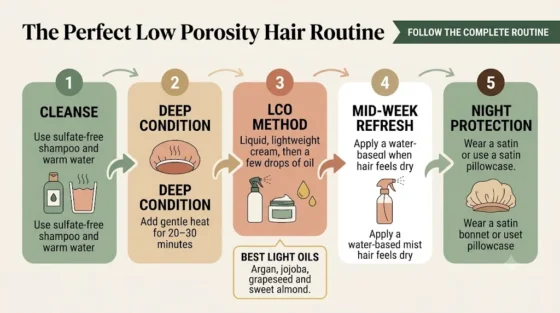
Once the individual steps make sense, here’s how they fit together across a normal week:
- Wash day (once or twice a week): Sulfate-free shampoo with warm water, followed by a heat-assisted deep condition for 20 to 30 minutes
- Right after washing: Apply lightweight products using the LCO method while hair is still damp, then seal with a small amount of light oil
- Mid-week: Refresh with a water-based leave-in spray whenever hair starts feeling dry or flat
- Every night: Silk bonnet or pillowcase, plus a light mist if hair feels dry
- Every 2 to 3 weeks: Clarify to clear buildup before it has a chance to block moisture again
For an extra hydration boost, homemade options like a banana hair mask can slot into wash day once every week or two, or if your scalp needs specific attention too, our guide to hair masks for an itchy scalp is worth a look.
Healthy Hair Growth Tips for Low Porosity Hair
Hair grows better when it’s properly hydrated, so everything above is already doing double duty for length too. Keep the scalp clean and moisturized, and steer clear of the heavy buildup that can quietly slow things down.
Scalp massages improve circulation, which supports growth from the root. If thicker, fuller hair is part of your goal here too, our guide on getting thicker hair naturally pairs well with everything in this routine.
Frequently Asked Questions
How often should you wash low porosity hair?
Once or twice a week works for most people with this hair type. Wash too often and you risk stripping the little natural oil your hair does absorb, wash too rarely and buildup takes over fast, so pay attention to how your specific hair responds rather than following a fixed number.
Does an apple cider vinegar rinse help low porosity hair?
Yes, in moderation. A diluted apple cider vinegar rinse can help gently smooth the cuticle and cut through product buildup between full clarifying washes. Keep it occasional, once every couple of weeks, since overdoing it can leave hair feeling dry.
Can low porosity hair become high porosity over time?
It can, usually through heat damage, chemical treatments, or harsh brushing that lifts and roughens the cuticle. Porosity isn’t always fixed for life, which is exactly why gentle handling matters even once your routine is working well.
Is low porosity hair always curly?
No. Low porosity shows up across straight, wavy, curly, and coily hair alike, it’s about the cuticle structure, not the curl pattern.
Curly low porosity hair just tends to show the symptoms, like slow drying and product buildup, more visibly than straight hair does.
Caring for low porosity hair doesn’t have to stay complicated once you understand what’s actually happening at the strand level.
Lean on lightweight products, add heat wherever you can, and clarify regularly so nothing gets the chance to build up and block moisture out.
Stick with a routine built around those three things, and soft, hydrated hair stops being the exception and starts being what you expect every day.