13 Elegant Bob Hairstyles for Older Black Women (Low-Maintenance & Hairline-Friendly)

Your hair at fifty, sixty, and beyond isn’t the same hair you had at twenty-five, density often thins at the crown first, curl patterns shift, and years of tension from braids and weaves start to show at the edges.
None of that is a flaw to fix, it’s new information your stylist needs. I’ve spent years working specifically with textured mature hair, and a well-cut bob solves more of this than almost any other length, it lifts the face at the jaw or collarbone with almost zero pull on the hairline.
These thirteen bob hairstyles protect fragile edges, work with real shrinkage instead of fighting it, and give silver or gray hair the dimension it needs to actually shine. Natural, relaxed, transitioning, or fully silver, there’s one here that works with your hair, not against it.
The 3 Mature Hair Rules
Edge Protection. Any style that adds constant pulling weight right at the temples works against hairline health over time. A bob redistributes that weight lower and wider, which is exactly what fragile edges need.
Shrinkage Geometry. Natural curl patterns can shrink thirty to fifty percent from stretched to resting length. Always ask your stylist to cut with your hair in its natural state, or factor shrinkage in upfront.
Layered Silver Dimension. Gray and silver strands reflect light differently from pigmented hair, and a flat, single-length cut can make that reflection look dull. Subtle internal layering gives it real movement and shine.
1. Curly Tapered Afro Bob
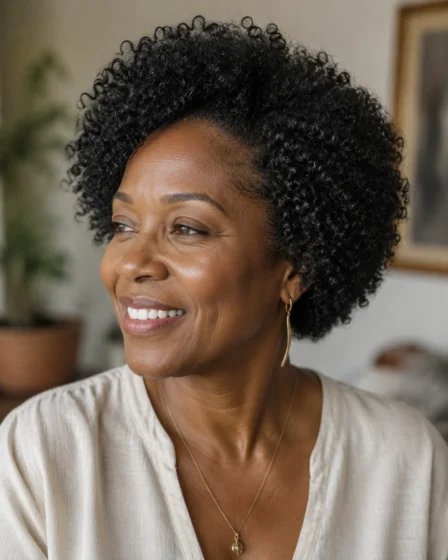
A tapered shape sits shorter and closer at the nape while keeping fullness through the crown, which lifts a lower jawline and draws the eye upward toward your cheekbones. Because the taper removes bulk at the neckline rather than at the hairline, your edges stay completely untouched by the cut itself.
Effort: Medium | Salon Visit: Every 6 to 8 weeks | Best For: Natural, tighter curl patterns
- Edge & moisture hack: Seal ends nightly with a lightweight oil, tapered ends dry out faster since there’s less length to hold moisture.
- Skip if: your hair is very fine, a tight taper needs real density at the nape to avoid looking patchy rather than sculpted.
💬 Salon script: “Please taper the nape but leave my crown full, I want lift without losing volume up top.”
2. Twist-Out Lob
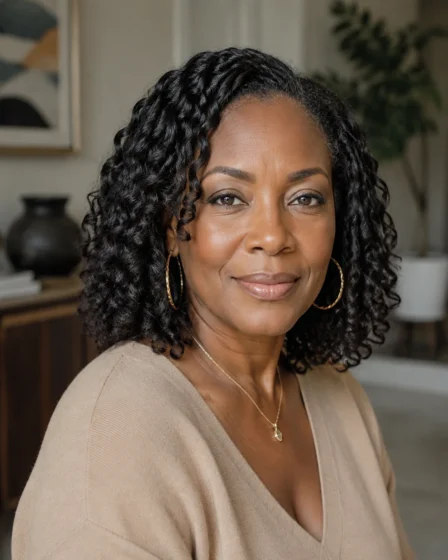
A twist-out gives natural hair a soft, defined wave pattern without any heat, landing right around the collarbone where it lengthens the neck. Since it’s simply your own hair set on twists rather than cut into a hard shape, there’s zero tension anywhere near your hairline.
Effort: Low | Salon Visit: Cut every 3 to 4 months | Best For: Natural, medium to loose curl patterns
- Edge & moisture hack: Twist damp hair on a leave-in and cream combination, dry twisting is the number one reason twist-outs frizz out by midday.
- Skip if: you’re not able to redo twists every few nights, this style genuinely needs re-twisting to hold its shape past day two or three. For more twist techniques to build a routine around, our short crochet twist hairstyles guide has plenty to borrow from.
💬 Salon script: “Cut this as a lob length with layers underneath specifically for twist definition, not a blunt line.”
3. Layered Deva Bob on Silver Curls
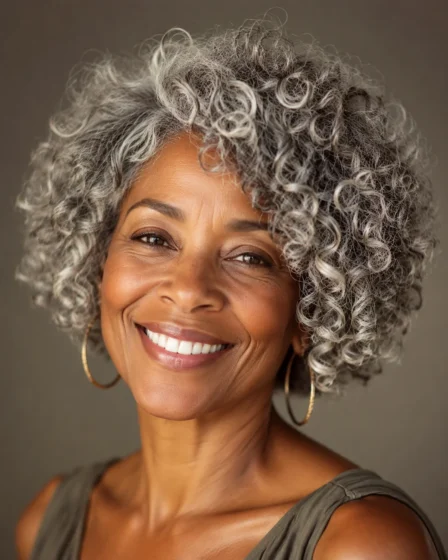
This is a curl-by-curl cutting technique that removes bulk from inside the shape rather than straight across the ends, exactly what keeps silver curls from looking like one flat, heavy mass. The internal layering catches light beautifully across every strand, giving gray hair real dimension instead of a dull, uniform sheen.
Effort: Medium | Salon Visit: Every 8 to 10 weeks | Best For: Natural or transitioning, silver or salt-and-pepper curls
- Edge & moisture hack: Use a curl cream with slip rather than gel alone, gray strands tend to be more porous and drier than pigmented hair.
- Skip if: your stylist isn’t trained in curl-cutting techniques, a Deva-style cut done wrong can genuinely disrupt curl shape for months. Our pixie cuts for gray hair guide has more ways to work with silver texture if you’re exploring shorter options too.
💬 Salon script: “Please cut this curl by curl while dry, not wet and blunt cut, I want the natural curl pattern to guide the shape.”
4. Coily Bixie
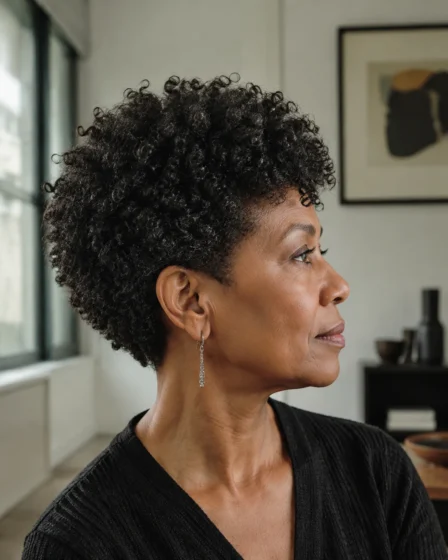
A bixie blends the fullness of a pixie with a bob’s slight length at the nape, adding real volume at the crown for coily textures that tend to compress under their own weight. The shorter overall length also means dramatically less daily manipulation, a genuine win for coily hair that’s naturally more fragile.
Effort: Low | Salon Visit: Every 6 weeks | Best For: Natural, tight coily patterns
- Edge & moisture hack: Apply product to soaking wet hair rather than damp, coily textures lose moisture fast and need that extra saturation to absorb it.
- Skip if: you’re not ready to commit to a shorter length overall, growing a bixie out gracefully takes real patience and a few awkward middle stages.
💬 Salon script: “Keep length and fullness at the crown, but taper it shorter toward the nape for that bixie silhouette.”
5. Classic Silk-Pressed A-Line Bob
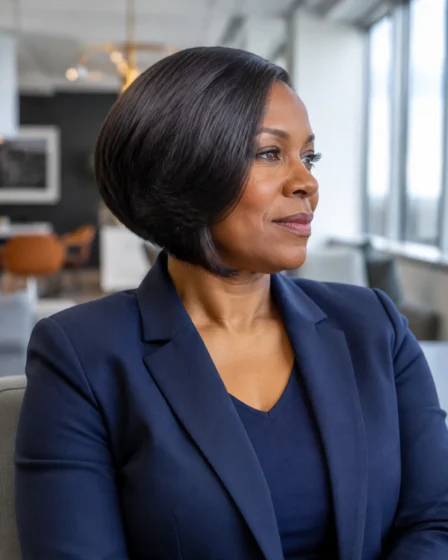
An A-line bob is cut slightly longer in front and shorter in back, angling attention toward the jawline and chin for a softening, lifted effect. Because the length falls below the ears rather than right at the temples, the cut itself puts no direct tension on delicate edge hair.
Effort: Medium | Salon Visit: Cut every 6 to 8 weeks, silk press every 2 to 3 | Best For: Relaxed or silk-pressed natural hair
- Edge & moisture hack: Wrap edges with a silk scarf every single night, this is the single biggest factor in how long a silk press actually lasts.
- Skip if: your hair reverts quickly in humidity without a strong protective layer underneath, a silk press needs genuinely dry conditions to hold its shape.
💬 Salon script: “Angle the length longer at the front and keep tension light through the crown when you flat iron.”
6. Feathered Layered Bob with Side Fringe
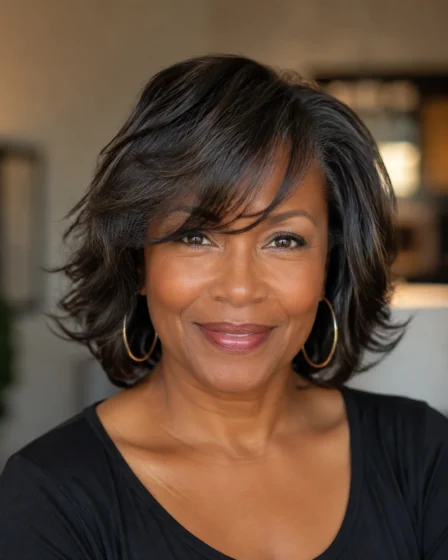
Soft, feathered layers throughout add movement around the face while a side fringe softens a prominent forehead or draws attention toward the eyes. The feathering technique removes weight gradually rather than in one heavy line, keeping the silhouette light instead of helmet-like.
Effort: Medium | Salon Visit: Every 6 weeks | Best For: Silk-pressed or relaxed, fine to medium density
- Edge & moisture hack: Finish with an anti-humidity serum at the roots specifically, root frizz is what breaks a feathered bob down fastest. Our guide to getting rid of frizzy hair has more humidity-proofing steps worth building into your routine.
- Skip if: your hair is extremely fine, heavy feathering on already-thin strands can read as sparse rather than soft.
💬 Salon script: “Feather the layers gradually through the ends, and keep the fringe long enough to side-sweep, not blunt across.”
7. Asymmetrical Silk Press Lob
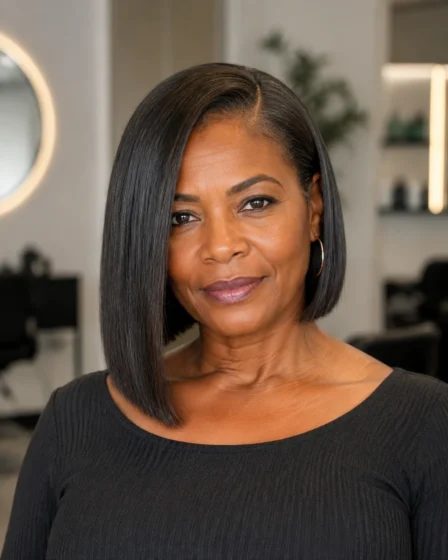
One side cut noticeably longer than the other creates a diagonal line that draws the eye up and across the face, genuinely one of the more slimming, sculptural options on this list. The asymmetry also means length falls unevenly around the hairline, so there’s no single spot bearing constant weight.
Effort: Medium | Salon Visit: Every 8 weeks | Best For: Relaxed or silk-pressed, straight to wavy texture
- Edge & moisture hack: Use a boar bristle brush for the final smoothing pass, it distributes natural scalp oils down the shaft and reduces how much heat you need.
- Skip if: you want a completely symmetrical, formal look for every occasion, asymmetry reads as intentionally edgy rather than classic.
💬 Salon script: “Cut a clear diagonal line from ear to collarbone, and keep the shorter side sharp rather than blended.”
8. Knotless Braided Bob
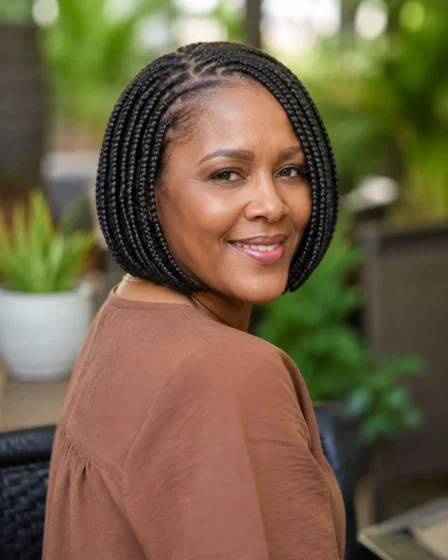
Knotless braids start with your own natural hair at the root before extension hair is added, removing the tight knot tension that traditional box braids put directly on the hairline. Cut to bob length, the reduced overall weight also means significantly less pull on your scalp over the six to eight weeks you’ll wear it.
Effort: Low | Salon Visit: Every 6 to 8 weeks | Best For: Natural, relaxed, or transitioning, any density
- Edge & moisture hack: Spritz your scalp directly with a lightweight leave-in every two to three days, braided styles trap dryness away from view until it’s already flaking.
- Skip if: your braider tends to braid tight by habit, ask specifically for knotless and looser tension at the first consultation, not after it’s installed. For sizing and technique ideas to bring to that consultation, our medium box braids hairstyles guide is a solid reference.
💬 Salon script: “Please keep the tension at my hairline loose enough that I don’t feel any pulling once you’re finished, even if that means slightly looser braids overall.”
9. Soft Butterfly Locs Bob
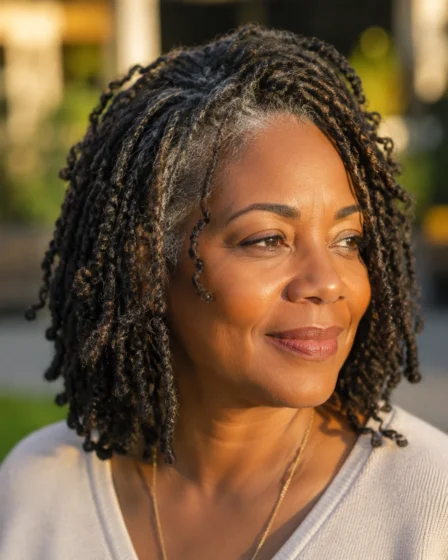
Butterfly locs use a distressed, wrapped technique that’s noticeably lighter than traditional loc extensions, and cut to bob length it sits close enough to the head that it doesn’t strain the neck or scalp the way longer faux locs can. The soft, textured finish also photographs beautifully against gray or silver natural hair peeking through at the roots.
Effort: Low | Install Life: 4 to 6 weeks | Best For: Natural, transitioning, or silver hair wanting a protective break
- Edge & moisture hack: Ask your loctician to leave your actual edges completely loose and unlocced, a soft, natural hairline frames the style better anyway.
- Skip if: you have a sensitive scalp that reacts to synthetic hair, do a small strand test at least a week before a full install. Our short invisible locs hairstyles guide has more low-tension loc options if this direction interests you.
💬 Salon script: “Keep these lightweight and distressed rather than tightly wrapped, and please leave my edges completely free.”
10. Passion Twist Chin Bob
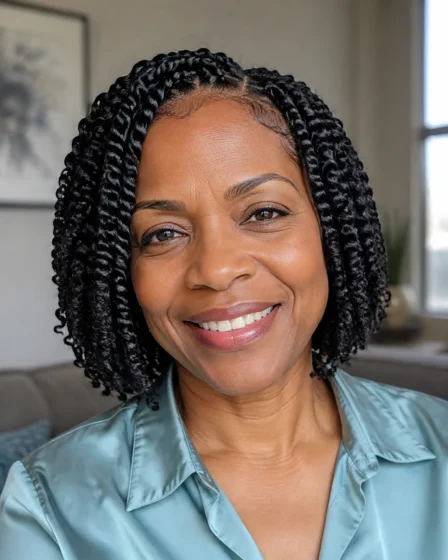
Passion twists cut to a sharp chin-length bob give protective styling a distinctly polished, editorial edge rather than the usual longer, cascading look. The wavy, textured extension hair blends naturally into gray or transitioning roots, making this a genuinely popular pick for anyone growing out color or a relaxer.
Effort: Low | Install Life: 4 to 6 weeks | Best For: Natural, relaxed, or transitioning, any texture
- Edge & moisture hack: Sleep exclusively on a satin or silk pillowcase for the entire install, cotton pulls moisture straight out of both your natural hair and the extensions overnight.
- Skip if: you have very short natural hair underneath, passion twists at a genuine chin length need at least a few inches of your own hair to anchor to comfortably.
💬 Salon script: “Install these at a blunt chin length, and keep the twist size on the smaller side so the shape stays neat rather than chunky.”
11. French Bob with Wispy Fringe
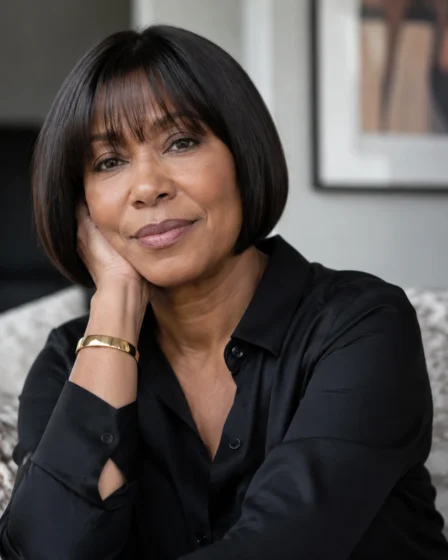
A French bob sits right at the jaw with a rounded, slightly blunt shape, and a wispy, textured fringe softens what could otherwise feel like a severe line. The rounded silhouette is genuinely one of the most universally flattering shapes for softening jaw or cheekbone structure that becomes more defined with age.
Effort: Medium | Salon Visit: Every 5 to 6 weeks | Best For: Silk-pressed, relaxed, or loosely natural, fine to medium density
- Edge & moisture hack: Use a small amount of edge control on the fringe itself, not the hairline, this softens flyaways without adding buildup near your actual edges.
- Skip if: you’re not up for the maintenance, a French bob’s blunt shape grows out visibly faster and needs more frequent trims to hold its line.
💬 Salon script: “Keep the overall length blunt at the jaw, but texturize the fringe so it’s soft and wispy, not a heavy, straight-across bang.”
12. Graduated Stacked Bob
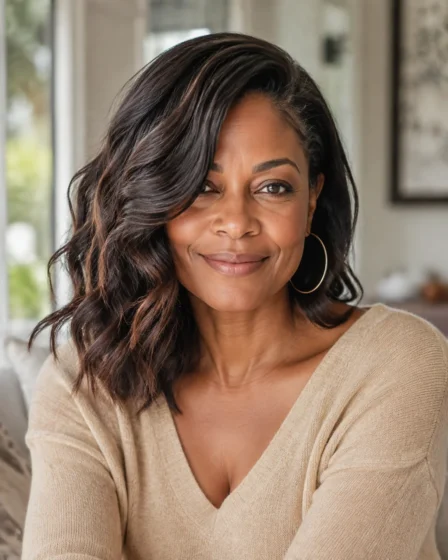
A graduated, stacked bob is cut shorter at the back and gradually longer toward the front, building real volume right at the nape, exactly where hair often thins first with age. That built-in stacking gives the whole shape a rounded, lifted silhouette even on hair that’s lost some natural density over the years.
Effort: Medium | Salon Visit: Every 6 weeks | Best For: Relaxed, silk-pressed, or fine natural hair needing volume
- Edge & moisture hack: Blow dry the back section upside down before setting the shape, it builds the root lift a graduated cut depends on.
- Skip if: your hair is already quite thick and voluminous, the stacking technique can read as bulky rather than sculpted on hair that doesn’t need the extra lift.
💬 Salon script: “Graduate the back with real stacking for volume, and keep the front sections softer and longer for balance.”
13. Side-Swept Wavy Lob
Loose, natural waves paired with a deep side part create gentle asymmetry that flatters nearly every mature face shape, without a single hard line or blunt edge anywhere in the cut. This is one of the lowest-tension styles on the entire list, since the length falls freely rather than being pulled into any fixed shape.
Effort: Low | Salon Visit: Every 8 to 10 weeks | Best For: Natural, relaxed, or transitioning, wavy to loosely curly texture
- Edge & moisture hack: Apply a lightweight curl cream at the part line specifically, that area is most exposed to sun and product buildup and dries out fastest.
- Skip if: you strongly prefer a defined, structured shape, this look is intentionally soft and undone rather than sharply cut.
💬 Salon script: “Cut this as a soft, layered lob with a deep side part built in, nothing blunt or one-length.”
3 Bob Styling Mistakes Older Black Women Should Avoid
Heavy edge control buildup. Layering thick edge control over the same hairline day after day clogs follicles and weighs down fragile baby hairs. Clarify the hairline at least once a week.
Excessive flat-iron heat on dry silver hair. Gray strands have less natural pigment protecting the shaft, making them more vulnerable to heat. Stay below 350 degrees and never iron it bone dry.
Tight, unyielding braids. A style installed so tight it causes headaches or visible bumps along the hairline is active damage, even if it looks neat at first. Real tension at the root means asking for it looser.
Summary Table at a Glance
| Hairstyle | Hair State | Maintenance Level | Key Benefit |
|---|---|---|---|
| Curly Tapered Afro Bob | Natural, tight curls | Medium | Crown volume, no hairline tension |
| Twist-Out Lob | Natural, medium to loose curls | Low | Zero heat, soft definition |
| Layered Deva Bob on Silver Curls | Natural or transitioning, silver | Medium | Dimension for gray curls |
| Coily Bixie | Natural, tight coils | Low | Volume with less manipulation |
| Classic Silk-Pressed A-Line Bob | Relaxed or silk-pressed | Medium | Universally flattering jawline lift |
| Feathered Layered Bob with Side Fringe | Silk-pressed or relaxed | Medium | Softens forehead, light movement |
| Asymmetrical Silk Press Lob | Relaxed or silk-pressed | Medium | Sculptural, slimming line |
| Knotless Braided Bob | Any, protective | Low | Zero root tension |
| Soft Butterfly Locs Bob | Natural or silver, protective | Low | Lightweight, low scalp strain |
| Passion Twist Chin Bob | Any, protective | Low | Polished protective style |
| French Bob with Wispy Fringe | Silk-pressed, relaxed, or natural | Medium | Softens a strong jawline |
| Graduated Stacked Bob | Relaxed or fine natural | Medium | Builds crown volume |
| Side-Swept Wavy Lob | Natural or relaxed, wavy | Low | Lowest-tension, softest shape |
Tell me where you’re at right now, are you rocking your natural gray, still relaxed, protective styling with locs, or somewhere in the middle of transitioning? Drop it in the comments, I read every single one, and it genuinely helps me know which styles to cover next for this community.