
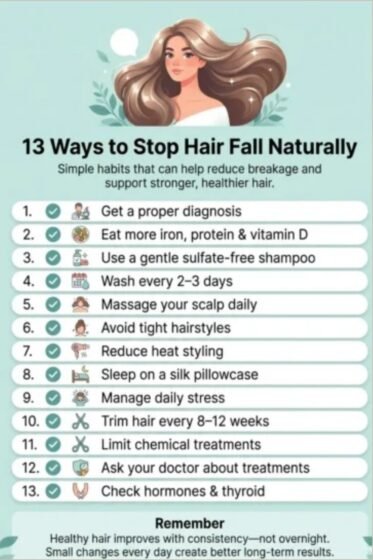
13 Ways to Stop Hair Fall for Women That Actually Work

Hair fall becomes a lot less overwhelming once you understand that it usually comes down to a handful of common, fixable causes rather than one mysterious problem. Diet, stress, styling habits, and scalp health all play a real part, and small changes across each of these areas tend to add up more than any single miracle product.
Below are thirteen practical ways to help reduce hair fall, along with a look at what typically causes it and when it makes sense to bring in a dermatologist rather than trying to solve it alone.
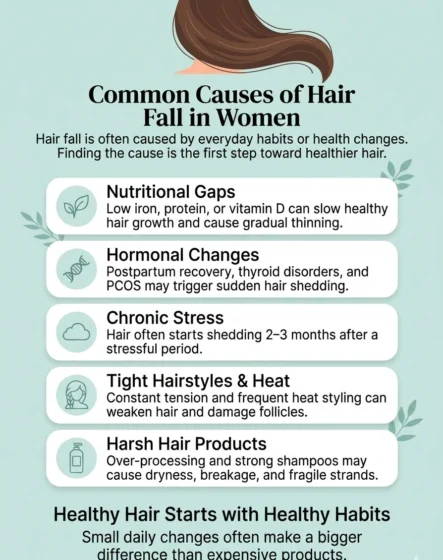
Common Causes of Hair Fall in Women
Hair fall usually traces back to one or more of these common causes, which is worth ruling in or out before choosing a treatment approach.
| Cause | What It Typically Looks Like |
|---|---|
| Nutritional gaps (iron, protein, vitamin D) | Gradual thinning spread evenly across the scalp. |
| Hormonal changes (postpartum, thyroid, PCOS) | Sudden shedding, often in noticeable clumps. |
| Chronic stress | Shedding that appears two to three months after a stressful period. |
| Tight hairstyles and heat styling | Thinning concentrated at the hairline and part. |
| Harsh products or over-processing | Brittle strands that snap rather than fall from the root. |
1. Get a Clear Diagnosis Before You Start Treating It
Most people jump straight to a new shampoo or supplement before figuring out what is actually causing the shedding, which wastes time on a fix that may not match the real problem.
A dermatologist can run basic bloodwork to check iron, thyroid function, and vitamin D, ruling in or out the most common medical causes before you spend money on anything else.
2. Add More Iron, Protein, and Vitamin D to Your Plate
Hair follicles are some of the most metabolically active cells in the body, which means they are also some of the first to show it when nutrient intake drops.
Lean meats, eggs, lentils, and leafy greens cover iron and protein well, while a short walk in daylight or a supplement, discussed with your doctor first, can help with vitamin D. Consistency here matters more than any single meal.
💡 Quick Tip
Talk to your doctor before starting any new supplement, since too much of certain nutrients, like iron, can cause its own problems.
3. Switch to a Gentle, Sulfate-Free Shampoo
People often assume shampoo cannot really affect hair fall since it only touches the hair itself, but harsh sulfates can dry out the scalp and leave it more prone to irritation and breakage.
A sulfate-free formula cleans just as effectively while being noticeably gentler on both scalp and strand. Give a new shampoo at least four to six weeks before judging results.
Can strip natural oils and leave the scalp more irritated.
Cleans effectively while staying gentler on scalp and strand.
4. Space Out Your Wash Days
Washing every single day can strip natural oils the scalp actually needs, while going too long between washes lets product and oil buildup clog follicles instead.
Most hair types do well with washing every two to three days, though oilier scalps may need more frequent washing and drier hair less. Pay attention to your own scalp rather than following a universal rule.
Finding your wash rhythm
5. Massage Your Scalp for a Few Minutes Daily
Spend two to three minutes each day working small circles across the scalp with your fingertips, moving from the hairline back toward the crown.
This simple habit may help support blood flow to the follicles, and it costs nothing beyond a few minutes before bed or in the shower. Add a few drops of a lightweight oil if your scalp tends to run dry.
6. Avoid Tight Hairstyles and Constant Tension
Tight ponytails, buns, and braids worn day after day pull steadily on the same hairline and part, which over time can lead to a specific kind of thinning called traction alopecia.
Loosen up your usual style, rotate where you part your hair, and give tight styles a rest between wears. This is one of the more reversible causes of hair fall when caught early.
1
Loosen your usual ponytail, bun, or braid tension.
2
Rotate where you part your hair every so often.
3
Give tight styles regular breaks between wears.
7. Cut Back on Heat Styling
Daily flat ironing or blow drying on high heat weakens the hair shaft over time, making strands more likely to snap rather than simply shed from the root.
Air drying or using a lower heat setting with a heat protectant a few times a week instead of daily use gives hair real recovery time. The difference shows up most in how easily hair tangles and breaks.
Use a heat protectant every time you style with heat.
Air dry a few days a week when possible.
Daily high-heat styling with no protectant.
Going straight from wet hair to a hot iron.
8. Use a Silk or Satin Pillowcase
Cotton pillowcases create real friction against hair overnight, which can lead to extra breakage and tangling that shows up as loose strands on your pillow each morning.
Switching to silk or satin lets hair glide rather than catch, and it is one of the lowest effort changes on this entire list. A satin bonnet works just as well if you prefer that option.
| Fabric | Effect on Hair |
|---|---|
| Cotton | More friction, more overnight tangling and breakage. |
| Silk or satin | Less friction, hair glides rather than catches. |
9. Manage Stress Levels Actively
Hair fall tied to stress tends to show up two to three months after the stressful period itself, which makes the connection easy to miss if you are only looking for an immediate cause.
Regular sleep, movement, and whatever stress management practice actually works for you, therapy, journaling, or exercise, can help support this delayed shedding pattern over time.
Stress-related shedding often shows up months later, not right away.
10. Get Regular Trims to Prevent Breakage-Related Thinning
Split ends that travel up the hair shaft eventually snap off higher up, which can look like thinning even when it is really just breakage rather than hair falling from the root.
A trim every eight to twelve weeks keeps the ends healthy enough that breakage stays at the tip rather than working its way up the strand.
- ▸Trim every eight to twelve weeks.
- ▸Breakage often gets mistaken for hair fall.
- ▸Healthy ends keep damage from traveling upward.
11. Be Cautious with Chemical Treatments and Coloring
Space out chemical services like relaxers, perms, and color treatments by at least six to eight weeks, and always patch test anything new on a small section first.
Overlapping harsh chemical processes back to back is one of the more common ways otherwise healthy hair ends up weak and prone to breakage.
12. Ask Your Doctor About Minoxidil or Other Treatments
For hair fall that does not improve with lifestyle changes alone, a dermatologist may discuss options like topical minoxidil, which is available over the counter and used by many women for pattern thinning.
This is worth a real conversation with a doctor rather than something to start on your own, since the right option depends on what is actually causing your specific hair fall.
Before starting any treatment
13. Check Your Hormones and Thyroid Levels
Postpartum shifts, thyroid imbalances, and conditions like PCOS are some of the most common hormone-related causes of hair fall in women, and they often go undiagnosed for longer than they should.
A simple blood panel can rule these in or out, and treating the underlying hormonal cause is usually far more effective than treating the hair fall on its own.
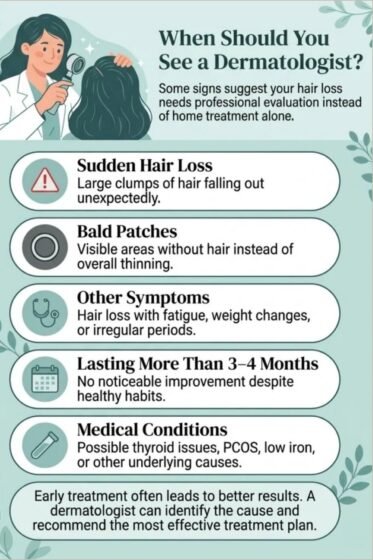
When to See a Dermatologist
Some signs point toward getting professional input sooner rather than trying more at-home fixes first.
Final Thoughts
Hair fall in women is rarely caused by just one thing, which is exactly why a combination of small, consistent changes tends to work better than chasing a single miracle fix. Diet, gentle handling, stress management, and the right products all add up over weeks and months rather than days.
Give any new routine at least two to three months before judging whether it is working, and do not hesitate to bring in a dermatologist if the shedding feels sudden, patchy, or paired with other symptoms. Save this list for whenever your hair needs a little extra support.